

Pineapple Upside Down Cake Recipe – Easy & Moist Classic
If there’s one dessert that instantly brings back nostalgic bakery vibes and old-fashioned comfort, it’s a classic pineapple upside down cake. With its golden caramelized topping, soft buttery sponge, and juicy pineapple rings, this cake is the perfect balance of sweet, tangy, and melt-in-your-mouth goodness. It’s the kind of dessert that looks impressive but is surprisingly simple to make at home.
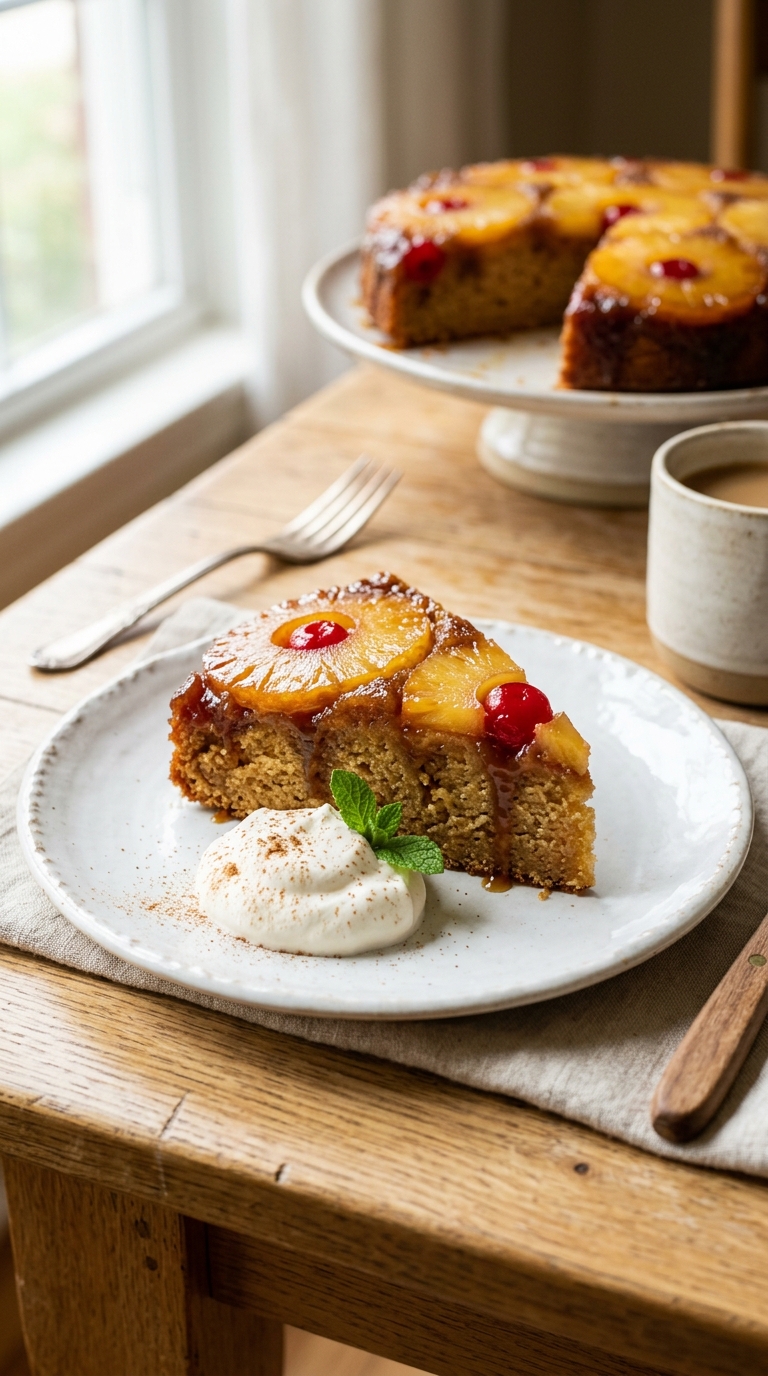
This pineapple upside down cake recipe is perfect for beginners, busy home bakers, or anyone craving a retro-style treat that never goes out of fashion. The magic happens when the brown sugar butter topping melts into the pineapple slices, creating a glossy, caramel-like layer that becomes the “top” once the cake is flipped.
Whether you’re baking for a family dinner, holiday gathering, or weekend treat, this recipe delivers bakery-style results every single time. You can also easily adapt it into gluten-free or dairy-free versions, making it a flexible dessert for different dietary needs. From its tropical flavor to its soft crumb, this cake is pure comfort on a plate.
Ingredients
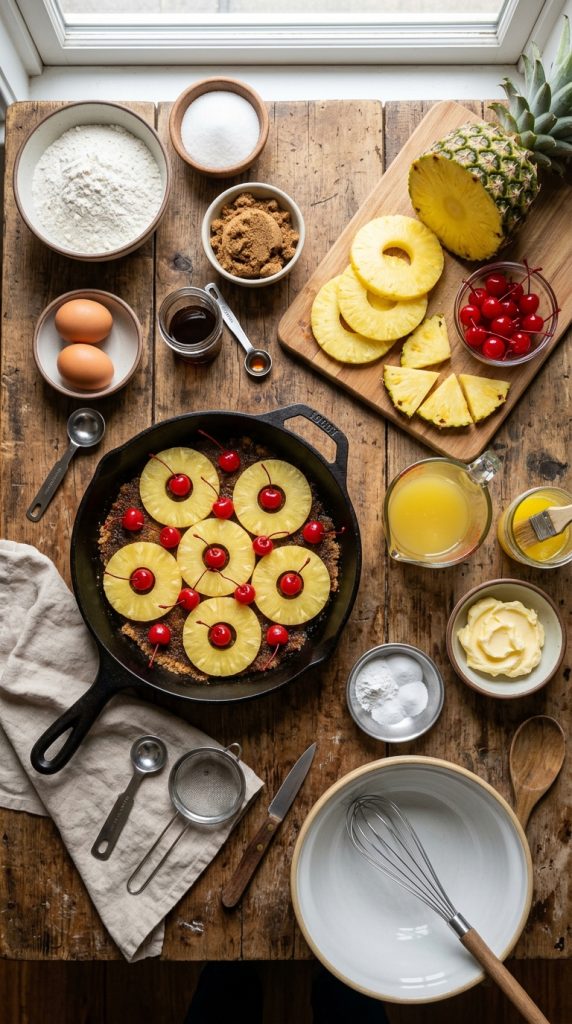
For the Topping:
- 1/4 cup (56g) unsalted butter, melted
- 2/3 cup (135g) brown sugar (light or dark)
- 7–9 pineapple slices (fresh or canned, drained)
- 10–12 maraschino cherries (optional but traditional)
For the Cake Batter:
- 1 1/2 cups (190g) all-purpose flour
- 1 1/2 tsp baking powder
- 1/4 tsp salt
- 1/2 cup (113g) unsalted butter, softened
- 3/4 cup (150g) granulated sugar
- 2 large eggs
- 1 tsp vanilla extract
- 1/2 cup (120ml) whole milk
Optional Variations:
- Use coconut milk instead of regular milk for a tropical twist
- Substitute almond flour for a gluten-free version
- Add 1/2 tsp cinnamon for warm spice flavor
- Use honey instead of brown sugar for a lighter caramel note
Equipment
To make this pineapple upside down cake recipe, you’ll need:
- 9-inch round cake pan (or cast iron skillet for rustic style)
- Mixing bowls (large and medium)
- Hand mixer or stand mixer
- Rubber spatula
- Measuring cups and spoons
- Whisk
- Cooling rack
- Knife (for slicing pineapple if using fresh)
Alternatives:
If you don’t have a mixer, you can use a whisk and some arm power—just make sure the butter and sugar are creamed well for a fluffy texture.
Instructions / Method
Step 1: Prepare the Topping
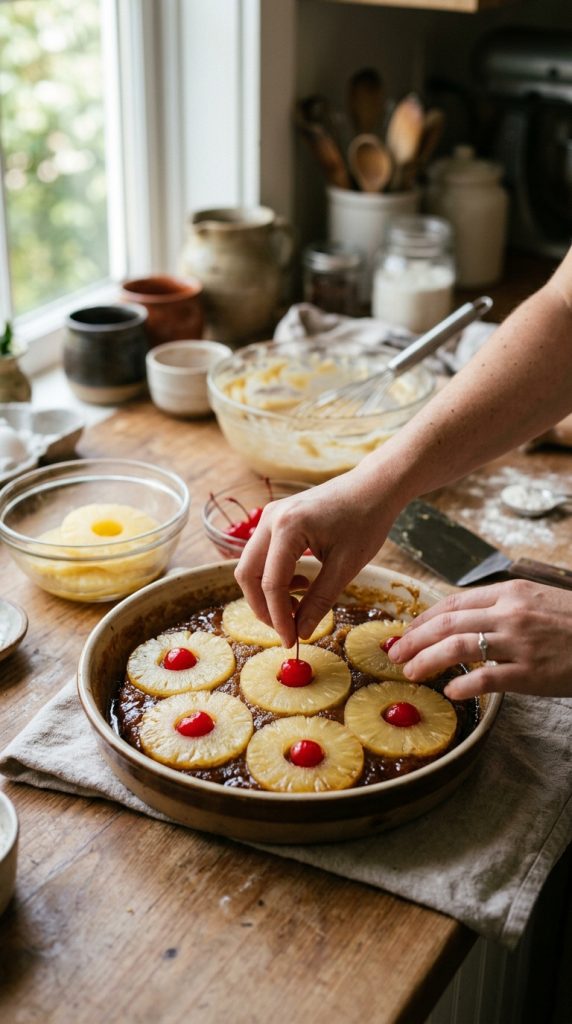
Preheat your oven to 350°F (175°C). Pour melted butter into the cake pan and spread evenly. Sprinkle brown sugar over the butter, making sure it covers the base completely. Arrange pineapple slices on top in a circular pattern. Place cherries in the center of each pineapple ring if using.
Step 2: Make the Cake Batter
In a bowl, whisk together flour, baking powder, and salt. In another bowl, cream softened butter and sugar until light and fluffy. This step is key for a soft and airy cake texture. Add eggs one at a time, mixing well after each addition, then stir in vanilla extract.
Step 3: Combine Wet and Dry Ingredients
Gradually add the dry ingredients into the wet mixture, alternating with milk. Start and end with dry ingredients. Mix gently—overmixing can make the cake dense instead of soft and fluffy.
Step 4: Assemble the Cake
Carefully pour the batter over the pineapple layer. Spread evenly using a spatula so the surface is smooth and level.
Step 5: Bake
Bake for 35–40 minutes, or until a toothpick inserted into the center comes out clean. The top should be golden brown and fragrant.
Step 6: Flip the Cake
Let the cake cool for 10–15 minutes (important for caramel setting). Place a plate over the pan and carefully flip it upside down. Gently lift the pan to reveal the glossy pineapple topping.
Step 7: Serve
Allow it to cool slightly before slicing. Serve warm or at room temperature for the best flavor and texture.
Health Benefits
While pineapple upside down cake is a dessert, it does offer some nutritional perks when enjoyed in moderation:
- Pineapple benefits: Rich in vitamin C, antioxidants, and digestive enzymes like bromelain, which may support digestion.
- Eggs: Provide protein and essential nutrients for energy.
- Butter in moderation: Supplies fat that enhances flavor and satiety.
- Homemade control: You can reduce sugar or use natural sweeteners for a lighter version.
For diet-friendly adjustments:
- Low-calorie version: Reduce sugar by 25%
- Vegan version: Replace eggs with flax eggs and use plant-based butter
- Gluten-free option: Use almond or gluten-free flour blends
- Dairy-free option: Swap milk with almond or oat milk
Cooking Tips & Tricks
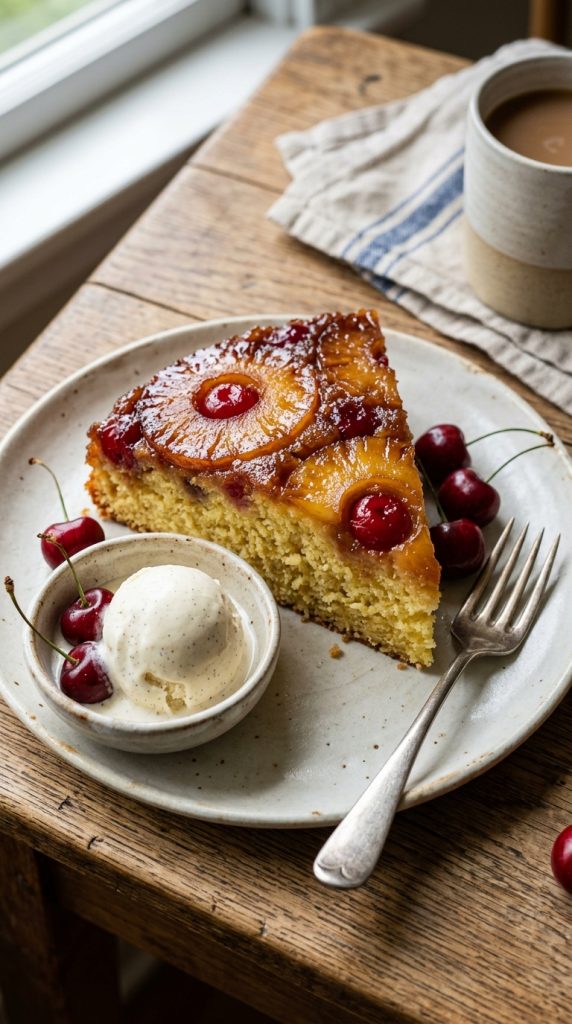
- Always let the cake rest before flipping to avoid breaking the caramel layer.
- Use room-temperature butter for a smoother batter.
- Don’t overmix the flour mixture—this keeps the cake soft and fluffy.
- If using fresh pineapple, pat it dry to prevent excess moisture.
- For extra caramel flavor, use dark brown sugar instead of light.
- A cast iron skillet gives a deeper, richer caramelized crust.
Common mistakes to avoid:
- Flipping too early (causes sticking or collapse)
- Using cold ingredients (affects texture)
- Overbaking (leads to dry cake)
Variations
This pineapple upside down cake recipe can be customized in many delicious ways:
Vegan Version
Replace eggs with flax eggs and use plant-based butter and almond milk.
Gluten-Free Version
Use a gluten-free flour blend or almond flour for a nutty flavor.
Tropical Twist
Add shredded coconut or a splash of coconut milk for a beach-inspired flavor.
Spiced Version
Add cinnamon, nutmeg, or ginger for a warm, cozy dessert.
Low-Sugar Version
Use coconut sugar or reduce brown sugar for a lighter caramel topping.
Pairings / Serving Ideas
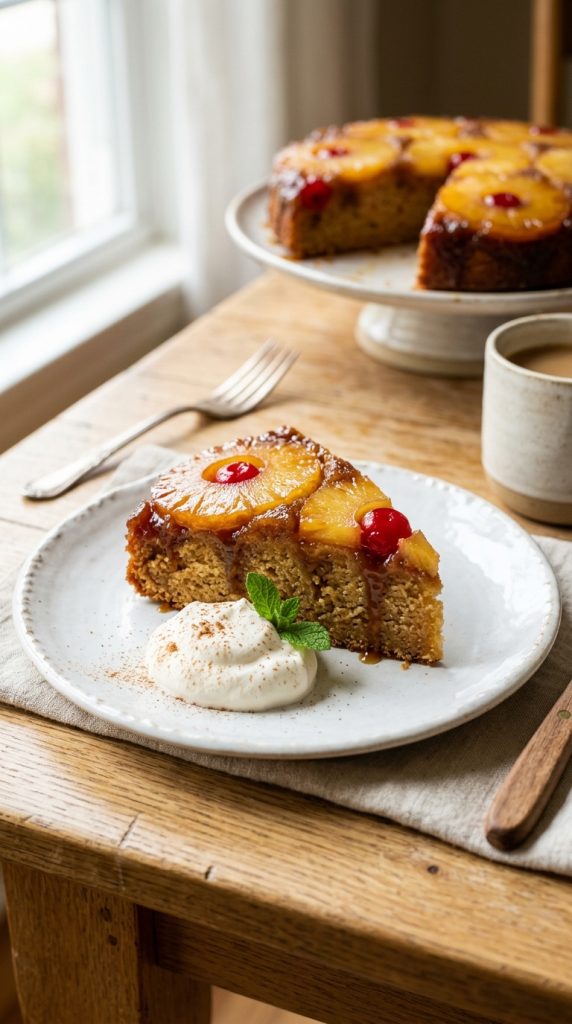
This cake pairs beautifully with:
- Vanilla ice cream for a classic combo
- Whipped cream for extra lightness
- Fresh berries for a tangy contrast
- Hot coffee or chai tea for cozy evenings
- A drizzle of caramel sauce for indulgence
Storage Tips:
- Store in an airtight container for up to 3 days at room temperature
- Refrigerate for up to 5 days
- Reheat slices slightly before serving for best texture
FAQs
1. Can I make pineapple upside down cake ahead of time?
Yes, you can bake it a day ahead. In fact, the flavor improves as the caramel settles overnight.
2. Can I use fresh pineapple instead of canned?
Absolutely! Fresh pineapple gives a brighter flavor, but make sure to remove excess moisture before baking.
3. Why did my cake stick to the pan?
It likely needed more butter or cooling time before flipping. Always grease well and wait 10–15 minutes before turning.
4. Can I make this cake without eggs?
Yes, use flax eggs or commercial egg replacers for a vegan-friendly version.
5. How do I keep the cake moist?
Do not overbake and make sure to measure ingredients accurately. The brown sugar topping also helps retain moisture.
Conclusion
This pineapple upside down cake recipe is a timeless dessert that never fails to impress. With its caramelized pineapple topping, soft buttery crumb, and rich tropical flavor, it’s the perfect combination of simple ingredients and beautiful presentation.
Whether you’re baking for guests or just treating yourself, this cake delivers warmth, nostalgia, and comfort in every bite. Once you try it, it’s sure to become a regular favorite in your kitchen.
Pineapple Upside Down Cake Recipe
Ingredients
Equipment
Method
- Step 1: Prepare the Topping
- Preheat your oven to 350°F (175°C). Pour melted butter into the cake pan and spread evenly. Sprinkle brown sugar over the butter, making sure it covers the base completely. Arrange pineapple slices on top in a circular pattern. Place cherries in the center of each pineapple ring if using.
- Step 2: Make the Cake Batter
- In a bowl, whisk together flour, baking powder, and salt. In another bowl, cream softened butter and sugar until light and fluffy. This step is key for a soft and airy cake texture. Add eggs one at a time, mixing well after each addition, then stir in vanilla extract.
- Step 3: Combine Wet and Dry Ingredients
- Gradually add the dry ingredients into the wet mixture, alternating with milk. Start and end with dry ingredients. Mix gently—overmixing can make the cake dense instead of soft and fluffy.
- Step 4: Assemble the Cake

- Carefully pour the batter over the pineapple layer. Spread evenly using a spatula so the surface is smooth and level.
- Step 5: Bake
- Bake for 35–40 minutes, or until a toothpick inserted into the center comes out clean. The top should be golden brown and fragrant.
- Step 6: Flip the Cake
- Let the cake cool for 10–15 minutes (important for caramel setting). Place a plate over the pan and carefully flip it upside down. Gently lift the pan to reveal the glossy pineapple topping.
- Step 7: Serve
- Allow it to cool slightly before slicing. Serve warm or at room temperature for the best flavor and texture.