

Quaker Oatmeal Cookie Recipe | Soft & Chewy Homemade Cookies
There is something undeniably nostalgic about the aroma of cinnamon and toasted oats wafting through a kitchen. For many of us, that scent is inextricably linked to the iconic round cardboard tube of Quaker Oats. The “Vanishing Oatmeal Raisin Cookie” recipe, which has graced the underside of those lids for decades, is more than just a set of instructions; it is a culinary touchstone. These cookies strike the perfect balance between a soft, pillowy center and slightly crisp, golden edges, offering a hearty texture that modern, thinner cookies often lack. Whether you are baking for a school bake sale, a holiday gathering, or simply a cozy Tuesday night, these cookies provide a sense of comfort that few other treats can match.
The beauty of the classic Quaker oatmeal cookie lies in its simplicity and its reliability. It uses pantry staples to create a complex flavor profile—warm molasses notes from brown sugar, the spicy kick of ground cinnamon, and the wholesome, nutty chew of old-fashioned oats. In this exploration of the legendary recipe, we will dive deep into the techniques that ensure a moist crumb, discuss the best ingredients for maximum flavor, and provide variations that cater to modern dietary needs. This is the definitive way to recreate that childhood magic with professional-level results.
| Recipe Detail | Information |
|---|---|
| Recipe Name | Classic Quaker Oatmeal Raisin Cookies |
| Cuisine | American |
| Course | Dessert / Snack |
| Prep Time | 15 Minutes |
| Cook Time | 10-12 Minutes |
| Total Time | 27 Minutes |
| Servings | 48 Cookies |
| Calories | 110 kcal per cookie |
| Difficulty Level | Easy |
Why You’ll Love This Recipe
There is a reason this recipe has remained virtually unchanged for over half a century. Here is why it continues to be a favorite in kitchens worldwide:
- Perfect Texture: The combination of butter and brown sugar creates a soft, chewy interior, while the oats provide a satisfying “bite” that prevents the cookie from being too airy.
- Nostalgic Flavor: It tastes exactly like the cookies Grandma used to make. The balance of cinnamon and vanilla is a timeless pairing that appeals to all ages.
- Pantry-Friendly: You likely already have every ingredient in your cupboard. There are no fancy flours or hard-to-find extracts required.
- Versatility: While raisins are the traditional choice, this dough serves as a master base for chocolate chips, dried cranberries, or even chopped nuts.
- Consistency: Unlike many “trendy” recipes that rely on specific humidity or expensive European butters, the Quaker method is incredibly forgiving and yields consistent results every time.
- Quick Turnaround: From craving to first bite, you can have a warm batch of cookies ready in under half an hour.
Ingredients
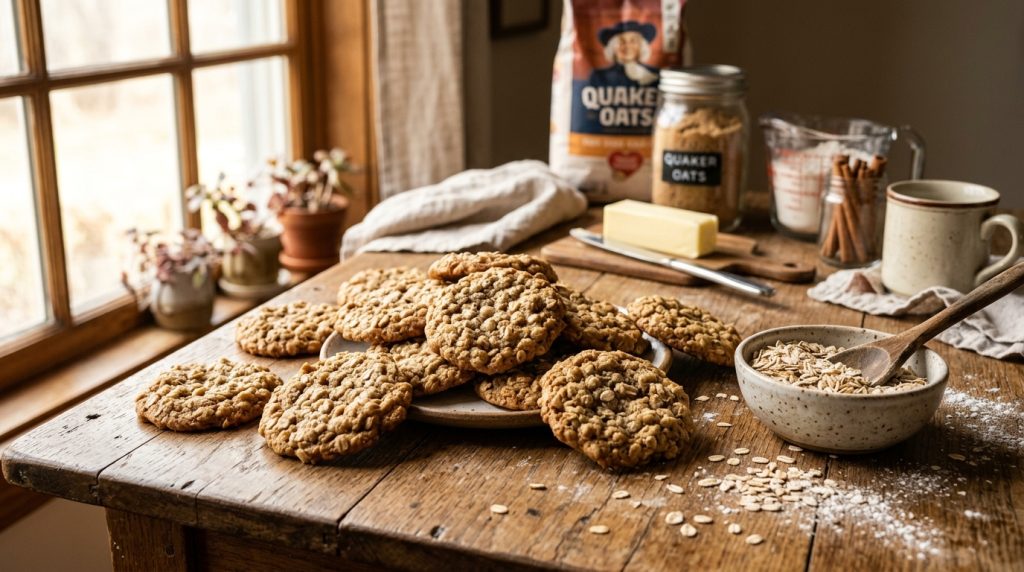
Ingredients You’ll Need
To achieve the authentic taste and texture of the original “Vanishing” recipe, stick to these specific measurements:
- Butter: 1 cup (2 sticks) unsalted butter, softened to room temperature. (If using salted butter, reduce the added salt by half).
- Brown Sugar: 1 cup firmly packed light brown sugar (adds moisture and molasses flavor).
- Granulated Sugar: 1/2 cup white sugar (helps with the golden-brown edges).
- Eggs: 2 large eggs, preferably at room temperature for better emulsification.
- Vanilla Extract: 1 teaspoon pure vanilla extract (avoid imitation for the best aroma).
- All-Purpose Flour: 1 & 1/2 cups, leveled precisely.
- Baking Soda: 1 teaspoon (ensure it is fresh for proper rise).
- Ground Cinnamon: 1 teaspoon (provides that signature warmth).
- Salt: 1/2 teaspoon.
- Quaker Oats: 3 cups. You can use Old Fashioned Oats for a heartier chew or Quick Oats for a more uniform, softer texture. Do not use Instant Oatmeal packets.
- Raisins: 1 cup. (Pro tip: Soak them in warm water for 10 minutes and pat dry before adding to keep them plump).
Optional Add-Ins
If you want to elevate the classic recipe, consider these additions:
- Chopped Walnuts or Pecans: 1/2 cup adds a delightful crunch and earthy flavor.
- Orange Zest: 1 tablespoon of fresh zest brightens the cinnamon notes beautifully.
- Dark Chocolate Chunks: Replace half the raisins with dark chocolate for a more indulgent treat.
- Shredded Coconut: 1/4 cup of unsweetened coconut adds a subtle tropical sweetness and extra chew.
Ingredient Substitutions
If you find yourself missing an item, these swaps work well:
- Butter: You can use coconut oil (solid state) for a dairy-free version, though the flavor will change slightly.
- Brown Sugar: If you only have white sugar, add 1 tablespoon of molasses to 1 cup of sugar to create a DIY brown sugar.
- Raisins: Dried cranberries, dried cherries, or chopped dates are excellent alternatives.
- Flour: A 1:1 gluten-free baking flour blend works surprisingly well in this recipe due to the high oat content.
Equipment Needed
Having the right tools ensures your cookies bake evenly and don’t stick:
- Electric Hand Mixer or Stand Mixer: Essential for properly creaming the butter and sugars.
- Large Mixing Bowl: For the main dough.
- Medium Mixing Bowl: To whisk the dry ingredients together.
- Baking Sheets: Heavy-duty aluminum pans are best for even heat distribution.
- Parchment Paper or Silicone Baking Mats: To prevent sticking and ensure easy cleanup.
- Wire Cooling Rack: Vital for stopping the cooking process and preventing soggy bottoms.
- Cookie Scoop: A 1.5-tablespoon scoop (medium size) ensures all cookies are uniform in size and bake at the same rate.
How To Make Quaker Oatmeal Cookies
Step 1: Prep and Preheat
Start by preheating your oven to 350°F (175°C). While the oven warms, line your baking sheets with parchment paper. This is a crucial step; even “non-stick” pans can cause the high sugar content in these cookies to caramelize and stick, making them difficult to remove without breaking.
Step 2: Cream the Butter and Sugars
In your large mixing bowl, combine the softened butter, light brown sugar, and granulated sugar. Using your mixer on medium speed, beat the mixture for about 2–3 minutes. You are looking for a texture that is light, fluffy, and pale in color. This process, known as creaming, incorporates air into the fat, which helps the cookies rise and prevents them from being too dense.
Step 3: Add Liquid Ingredients
Add the eggs one at a time, beating well after each addition. This ensures the eggs are fully incorporated into the fat. Pour in the vanilla extract. The mixture should look smooth and slightly glossy. If it looks curdled, continue beating for another 30 seconds until it emulsifies.
Step 4: Whisk Dry Ingredients
In a separate medium bowl, whisk together the all-purpose flour, baking soda, cinnamon, and salt. Whisking helps break up any clumps in the flour and ensures the baking soda is evenly distributed, so you don’t end up with “salty spots” in your cookies.
Step 5: Combine Wet and Dry
Turn your mixer to the lowest setting. Gradually add the flour mixture to the butter mixture. Mix only until the white streaks of flour disappear. Overmixing at this stage develops gluten, which can lead to a tough, bready cookie rather than a tender, chewy one.
Step 6: Fold in Oats and Raisins
Using a sturdy spatula or a wooden spoon, fold in the Quaker Oats and the raisins by hand. The dough will be quite thick and heavy. Ensure the raisins are distributed evenly so every cookie gets a fair share of fruit. The aroma at this stage should be heavily dominated by the sweet scent of oats and cinnamon.
Step 7: Scoop and Bake
Drop rounded tablespoonfuls of dough onto the prepared baking sheets, spacing them about 2 inches apart. They will spread slightly, so give them room to breathe. Place them on the center rack of the oven. Bake for 10 to 12 minutes. Crucial Tip: Pull them out when the edges are a light golden brown but the centers still look slightly “underdone” or soft. They will continue to firm up on the hot pan.
Step 8: Cool
Let the cookies rest on the baking sheet for 2 minutes. This allows the structure to set. Then, carefully transfer them to a wire cooling rack to cool completely. If you leave them on the pan too long, the bottoms may become overly browned and hard.
Expert Cooking Tips
- Temperature Matters: Ensure your butter is “cool room temperature.” It should yield to a thumbprint but not be oily or melting. If the butter is too soft, the cookies will spread into flat puddles.
- The Spoon and Level Method: Never scoop flour directly with the measuring cup. This packs the flour down, leading to dry cookies. Instead, spoon the flour into the cup and level it off with a knife.
- Hydrate the Oats: If you have time, let the dough sit in the refrigerator for 30 minutes before baking. This allows the oats to absorb some of the moisture from the eggs and butter, resulting in a deeper flavor and a more consistent texture.
- Check Your Oven: Many ovens run hot or cold. Using an inexpensive oven thermometer can save your batch from burning.
- Plump the Raisins: If your raisins feel hard or dry, soak them in hot water (or even apple juice) for 10 minutes, then drain and pat dry. This prevents them from sucking moisture out of the cookie dough.
Common Mistakes To Avoid
- Using Instant Oats: Instant oatmeal is pre-cooked and cut very thin. Using it in this recipe will result in a mushy cookie that lacks the signature chew. Always stick to Old Fashioned or Quick Oats.
- Overbaking: This is the #1 reason for hard oatmeal cookies. Because the dough is dark from the brown sugar and cinnamon, it’s hard to see the “browning.” Trust the timer and the “soft center” rule.
- Measuring by Volume vs. Weight: If your cookies are consistently coming out different ways, try using a kitchen scale. 1.5 cups of flour should weigh approximately 180–190 grams.
- Crowding the Pan: If the cookies touch while baking, they won’t develop those slightly crisp edges. Stick to 12 cookies per standard baking sheet.
- Cold Butter: If you try to cream cold butter, it will stay in small chunks, and your dough won’t be cohesive. If you’re in a rush, grate the cold butter into the bowl to help it warm up faster.
Health Benefits
While these are certainly a treat, they offer more nutritional value than your average sugar cookie:
- Fiber: Oats are a fantastic source of beta-glucan, a type of soluble fiber that supports heart health and digestion.
- Iron and Minerals: Oats provide essential minerals like manganese, phosphorus, and magnesium.
- Antioxidants: Cinnamon is loaded with polyphenols, which have anti-inflammatory properties.
- Satiety: Because of the fiber and protein in the oats and eggs, these cookies are more filling than refined-flour snacks, helping with portion control.
Dietary Notes: For a Gluten-Free version, ensure your oats are certified GF and use a high-quality 1:1 GF flour blend. For a Lower-Sugar version, you can reduce the granulated sugar by half without significantly affecting the structure.
Variations
Vegan Version
Replace the butter with a high-quality vegan butter stick (like Miyoko’s) and swap the two eggs for “flax eggs” (2 tablespoons ground flaxseed mixed with 6 tablespoons water, set for 10 minutes). The texture will be slightly denser but equally delicious.
Gluten-Free Version
Use certified gluten-free oats and a 1:1 gluten-free baking flour. Add an extra 1/2 teaspoon of xanthan gum if your flour blend doesn’t already include it to help with the “chew.”
The “Everything” Cookie
Add 1/2 cup chocolate chips, 1/2 cup chopped walnuts, and 1/4 cup shredded coconut. This creates a hearty, trail-mix style cookie that is perfect for hiking or long road trips.
Apple Pie Oatmeal Cookies
Replace the raisins with finely diced dried apples and add an extra 1/2 teaspoon of nutmeg and a pinch of ground cloves to the dry ingredients.
What To Serve With Quaker Oatmeal Cookies
Side Dishes & Pairings
These cookies are versatile. Serve them alongside a fruit platter featuring sliced apples and pears to balance the sweetness. For a decadent dessert, crumble a warm cookie over a bowl of high-quality vanilla bean ice cream.
Drinks
- Classic: A tall, cold glass of whole milk or oat milk.
- Warm: A spicy Chai latte or a dark roast coffee complements the cinnamon and molasses perfectly.
- Evening: A small glass of tawny port or a nutty sherry pairs wonderfully with the toasted oat flavors.
Holiday & Party Ideas
For the holidays, dip half of each baked cookie into melted white chocolate and sprinkle with festive sprinkles. For parties, make “Mini Oatmeal Bites” by using a small scoop and reducing the bake time to 8 minutes.
Storage Instructions
Refrigerator Storage
You can store baked cookies in an airtight container at room temperature for up to 5 days. If you live in a very humid climate, storing them in the fridge can keep them from getting too soft, though it may slightly harden the butter. Always let them come to room temperature before eating for the best texture.
Freezer Storage
Baked Cookies: Freeze in a single layer on a tray before transferring to a freezer bag. They stay fresh for up to 3 months.
Cookie Dough: Scoop the dough into balls and freeze. You can bake them straight from the freezer—just add 2 minutes to the total bake time. This is the best way to have “fresh” cookies on demand.
Reheating Instructions
To recapture that “just out of the oven” feel, microwave a single cookie for 8–10 seconds. Be careful not to overdo it, or the sugars will become dangerously hot.
Nutritional Information
| Nutrient | Amount Per Cookie |
|---|---|
| Calories | 110 kcal |
| Total Fat | 5g |
| Saturated Fat | 3g |
| Cholesterol | 15mg |
| Sodium | 75mg |
| Total Carbohydrates | 16g |
| Dietary Fiber | 1g |
| Sugars | 9g |
| Protein | 2g |
Disclaimer: Nutrition values are estimates and may vary depending on the specific brands of ingredients used.
FAQs
What is the secret to moist oatmeal cookies?
The secret lies in two things: using enough brown sugar (which contains moisture-retaining molasses) and not overbaking. Removing the cookies while the centers still look slightly wet ensures they stay soft once cooled. Additionally, soaking your raisins in warm water before adding them prevents them from absorbing the moisture from the dough.
Did Quaker Oats change their oatmeal cookie recipe?
While the core ingredients have remained largely the same, Quaker has occasionally updated the wording or formatting of the recipe on their packaging. The classic “Vanishing Oatmeal Raisin Cookie” recipe remains the gold standard, though some older versions used slightly different ratios of shortening vs. butter. The current version using all butter is generally preferred for flavor.
Can I use Quick Oats instead of Old Fashioned?
Yes! Quick oats will result in a more uniform, slightly softer, and less “nubbly” cookie. Old-fashioned oats provide a more rustic, chewy texture. Both work perfectly in this recipe; it simply comes down to personal preference.
How do I keep my cookies from spreading too much?
Ensure your butter isn’t too warm when you start, and never place cookie dough onto a hot baking sheet between batches. If your kitchen is very warm, chill the dough for 30 minutes before baking to help the fat stay solid longer in the oven.
Why are my oatmeal cookies hard?
Hard cookies are usually the result of over-measuring the flour or over-baking the cookies. If you bake them until they are dark brown all over, they will be crunchy rather than chewy. Also, ensure your baking soda isn’t expired, as lack of rise can lead to a hard, dense disc.
Can I make the dough in advance?
Absolutely. Oatmeal cookie dough actually improves after 24 hours in the fridge. The flavors meld, and the oats hydrate, leading to a superior texture. You can keep the dough in the fridge for up to 3 days.
Recipe Summary
| Category | Details |
|---|---|
| Prep Time | 15 Minutes |
| Cook Time | 10-12 Minutes |
| Servings | 4 Dozen |
| Main Flavor Notes | Cinnamon, Molasses, Toasted Oats |
| Best Occasions | After-school snacks, Holiday platters, Comfort food |
Conclusion
The classic Quaker Oatmeal Cookie is a testament to the idea that some things don’t need to be reinvented. Its enduring popularity is rooted in its perfect texture and the warm, comforting flavors of cinnamon and brown sugar. By following the “Vanishing Oatmeal Raisin” method and applying a few professional tips—like creaming your butter properly and pulling the cookies out of the oven just before they look “done”—you can achieve a bakery-quality result in your own kitchen. These cookies aren’t just a dessert; they are a piece of culinary history that continues to bring joy to every generation. Whether you stick to the traditional raisin version or experiment with chocolate chips and nuts, this recipe is a reliable foundation for your baking repertoire. We invite you to try this recipe today and experience the magic for yourself. If you enjoyed this guide, please leave a comment below with your favorite add-ins or share your baking success with friends and family!


