
Easy Pork Tenderloin Recipe (Juicy, Never Dry)
Pork tenderloin has an unfair reputation: it is either the star of the dinner table or a dry, gray disappointment, with no middle ground. The difference is almost never the recipe — it is the method. Sear it hard on the stove, finish it in the oven, pull it at exactly 145°F, and rest it. Do those four things and this lean cut turns out blushing, juicy, and tender every single time.
This recipe adds one more layer of insurance: a sticky honey-garlic glaze built right in the same skillet, which caramelizes onto the pork as it roasts. Sweet, savory, garlicky, with a little tang from apple cider vinegar — it is the kind of sauce people ask about.
Forty minutes, one pan, and a main dish that tastes like you tried much harder than you did. Serve it with roasted potatoes or a big green salad and call it a night.
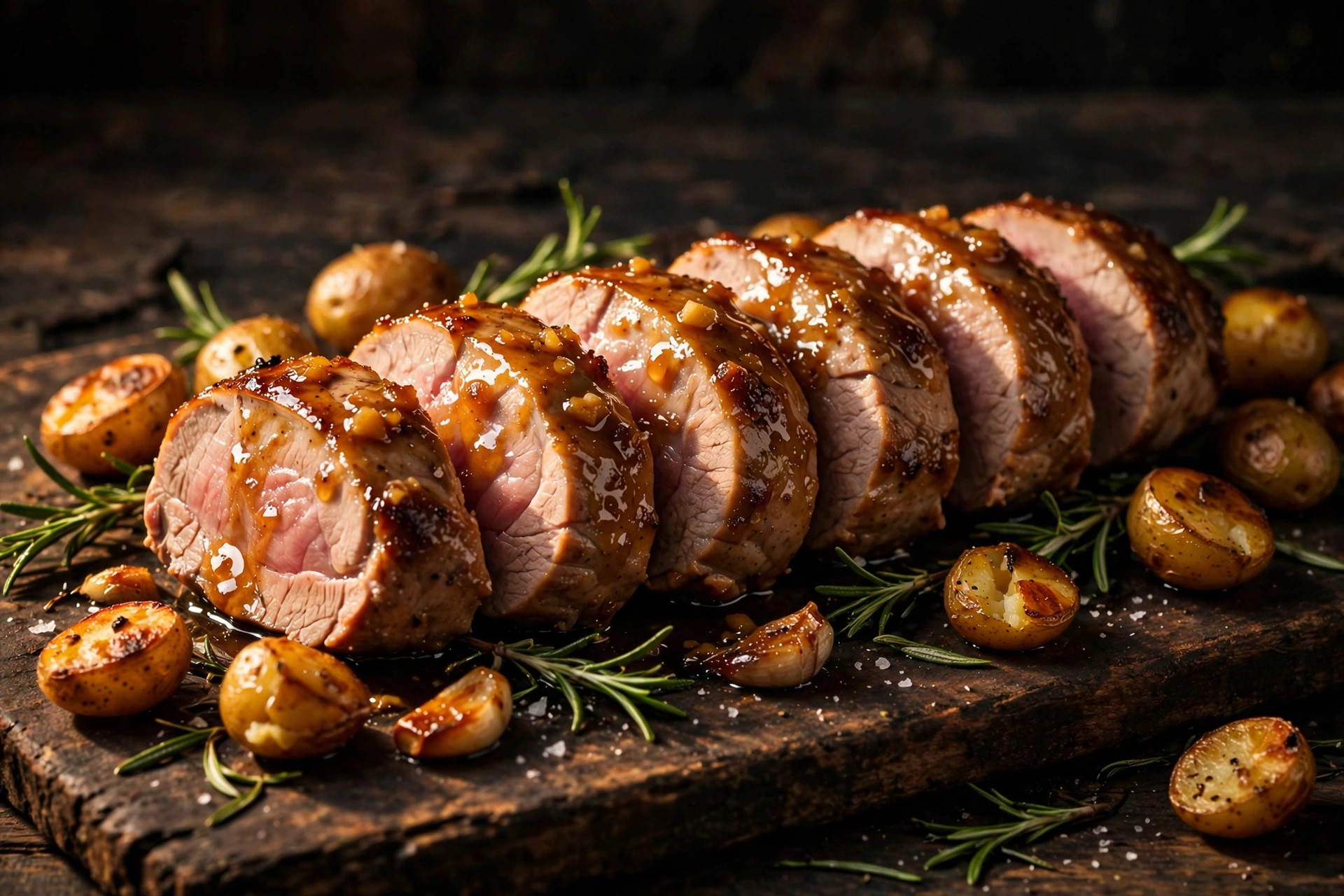
Prep time: 10 mins | Cook time: 30 mins | Total time: 40 mins (+ 10 min rest) | Servings: 4 | Calories: 320 per serving
Why You’ll Love This Pork Tenderloin Recipe
- Juicy by design: The sear-then-roast method plus the 145°F rule means no more dry pork — the technique does the heavy lifting.
- One-pan glaze: The honey-garlic glaze cooks in the same skillet, no extra saucepan, and it caramelizes right onto the meat.
- 40-minute dinner: Faster than takeout, fancy enough for guests. A true weeknight showstopper.
- High-protein and lean: About 36g of protein per serving with minimal fat — weeknight-healthy without tasting like it.
- Leftover magic: Sliced cold over salads or tucked into wraps, leftovers are arguably even better the next day.
Ingredients
- 1 1/2 lb pork tenderloin (about 1 large or 2 small)
- 1 tsp kosher salt
- 1/2 tsp black pepper
- 1/2 tsp garlic powder
- 1/2 tsp smoked paprika
- 2 tbsp olive oil
- 1/4 cup honey
- 3 tbsp low-sodium soy sauce
- 4 cloves garlic, minced
- 1 tbsp apple cider vinegar
- 1 tsp fresh ginger, grated (or 1/4 tsp ground)
- 1 tbsp unsalted butter
- 1 tbsp chopped fresh parsley, to finish
Equipment Needed
- Sharp thin knife (for trimming)
- Large oven-safe skillet (cast iron is ideal)
- Instant-read meat thermometer
- Tongs
- Small bowl and whisk
How To Make
- Trim the silver skin. Slide a thin, sharp knife under the silvery-white membrane running along the tenderloin and shave it off — it will not render or soften in cooking, and it is the main reason tenderloin curls and cooks unevenly. Pat the meat completely dry with paper towels (a dry surface sears; a wet one steams).
- Season. Rub the tenderloin all over with the salt, pepper, garlic powder, and smoked paprika.
- Sear. Heat the olive oil in an oven-safe skillet over medium-high heat until it shimmers. Sear the tenderloin 2–3 minutes per side, turning with tongs, until deep golden all over — about 8–10 minutes total.
- Build the glaze. Reduce the heat to medium. Whisk the honey, soy sauce, garlic, vinegar, and ginger in a small bowl, then pour into the skillet with the butter. Simmer 1–2 minutes, turning the pork to coat, until the glaze thickens enough to coat a spoon.
- Roast. Transfer the skillet to a 400°F oven. Roast 12–15 minutes, basting once halfway through with the pan glaze, until an instant-read thermometer inserted in the thickest part reads 145°F.
- Rest and slice. Transfer to a cutting board, tent loosely with foil, and rest 10 full minutes — this redistributes the juices and the temperature coasts up to about 150°F. Slice into 1/2-inch medallions, spoon over the pan glaze, and finish with parsley.
Why 145°F Changes Everything
For decades, home cooks were taught to cook pork to 160°F or beyond — and that is exactly why so much pork tenderloin is dry. The USDA updated its guidance years ago: whole cuts of pork are safe at 145°F with a 3-minute rest. At 145°F the center is blushing pink and juicy; at 160°F+ it is gray and chalky.
The other non-negotiable is the rest. Cutting too early lets the juices run all over the board instead of staying in the meat. Ten minutes under loose foil, then slice — you will see the difference immediately.
And the silver skin: if your tenderloin has ever curled into a banana shape in the pan, that membrane was the culprit. It contracts when heated and squeezes the meat. Two minutes with a sharp knife solves it forever.
Tips & Variations
- Maple-Dijon variation: Swap the honey for pure maple syrup and add 2 tbsp Dijon mustard to the glaze. Sweet, tangy, elegant.
- No oven-safe skillet? Sear in any skillet, then transfer the pork to a foil-lined baking sheet, pour the glaze over, and roast.
- Herb-crusted: Skip the glaze; rub the seared pork with 1 tbsp Dijon and press on a mix of chopped rosemary, thyme, and breadcrumbs before roasting.
- Grill option: Sear over direct heat, then finish over indirect heat with the lid closed, brushing with glaze, until 145°F.
- Serving ideas: Roasted baby potatoes, garlicky green beans, creamy mashed potatoes, or a crisp apple-fennel slaw to cut the richness.
Storage
Refrigerate leftovers in an airtight container for up to 4 days. Reheat gently — slice cold and warm in a covered skillet with a splash of broth, or microwave at 50% power in short bursts. Overheating is what dries it out the second time. Cooked tenderloin also freezes well for up to 3 months; thaw overnight in the fridge.
FAQ
Is it safe to eat pork at 145°F? Yes. The USDA recommends 145°F followed by a 3-minute rest for whole cuts of pork. The center may be slightly pink — that is normal and safe.
Why did my pork tenderloin turn out dry? The three usual causes: overcooking past 150°F, skipping the rest, or not trimming the silver skin. An instant-read thermometer is the single best tool for juicy pork.
What is the difference between pork tenderloin and pork loin? Tenderloin is the long, thin, ultra-lean muscle — this recipe is built for it. Pork loin is a thicker, wider roast that needs longer cooking. Do not swap them 1:1.
Can I marinate it ahead? Yes — the dry rub (salt, pepper, garlic powder, paprika) can go on up to 24 hours ahead, wrapped in the fridge. The glaze should be made fresh.
How do I know when it is done without a thermometer? Honestly, get a thermometer — it is the only reliable way. But in a pinch: firm to the touch with slight give, juices running clear, and a blush-pink (not raw-red) center when sliced.
Tips for Juicy Pork Tenderloin
Use a Meat Thermometer
Pork tenderloin goes from perfect to overdone in a matter of minutes, and color is not a reliable guide. An instant-read thermometer is the only sure way to pull the meat at exactly 145°F for juicy, blushing results every time.
Sear Before Roasting
A hard sear in a hot, oven-safe skillet builds a deep golden crust and a layer of flavor that the oven alone cannot create. Don’t crowd the pan, and let the pork sit undisturbed for a proper brown on each side.
Rest Before Slicing
Let the tenderloin rest for 5–10 minutes after roasting so the juices redistribute instead of running out onto the cutting board. Tent it loosely with foil while it rests.
Pork Tenderloin Variations
Herb-Crusted Pork Tenderloin
Press a mixture of chopped rosemary, thyme, garlic and olive oil onto the pork before searing for a fragrant, rustic crust.
Balsamic Glazed
Swap the honey-garlic glaze for a balsamic reduction — tangy, dark and caramelized, it pairs beautifully with roasted vegetables.
Asian-Inspired Marinade
Marinate the pork for 30 minutes in soy sauce, sesame oil, grated ginger and a touch of honey, then sear and roast as directed. Finish with sliced scallions and sesame seeds.
What to Serve With Pork Tenderloin
This is a lean, mild main that loves bold sides: garlic mashed potatoes, roasted Brussels sprouts, a crisp apple slaw, or buttered egg noodles all work. The pan sauce from the skillet ties everything together — spoon it over the sides too.
What temperature should pork tenderloin be cooked to?
Pull it from the oven at 145°F internal temperature, measured in the thickest part. Carryover heat will nudge it a few degrees higher as it rests — this is the USDA-recommended safe temperature for pork, and it keeps the meat juicy rather than gray.
Can I make this ahead of time?
You can sear the pork and make the glaze a few hours ahead, but do the oven roasting just before serving for the best texture. Leftovers keep well refrigerated for 3–4 days and reheat gently in a covered skillet with a splash of broth.
Related:
Easy Hummus Recipe (Ultra-Creamy in 10 Minutes)
The Best Pumpkin Bread Recipe (Moist, Warmly Spiced & Cozy)
Easy Butter Chicken Recipe (Creamy, Better Than Takeout)
Easy Classic Meatloaf Recipe (Juicy and Tender Every Time)
Easy Pork Tenderloin
Ingredients
Method
- Trim the silver skin from the tenderloin with a sharp thin knife. Pat completely dry. Season all over with salt, pepper, garlic powder, and smoked paprika.
- Heat the olive oil in a large oven-safe skillet over medium-high heat. Sear the tenderloin 2-3 minutes per side until deep golden all over.
- Meanwhile, whisk the honey, soy sauce, garlic, vinegar, and ginger in a small bowl.
- Reduce heat to medium. Pour the glaze into the skillet with the butter; simmer 1-2 minutes, turning the pork to coat.
- Transfer the skillet to a 400°F oven. Roast 12-15 minutes, basting once halfway, until an instant-read thermometer reads 145°F in the thickest part.
- Rest 10 minutes under loose foil. Slice into medallions, spoon over the pan glaze, and finish with parsley.


