Hugo Spritz Recipe (Light, Floral & Ready in 5 Minutes)
There’s a reason the Hugo Spritz has quietly overtaken the Aperol Spritz on every sun-drenched patio from Milan to Brooklyn. Where Aperol is bitter and bold, the Hugo is soft and floral — elderflower liqueur, dry Prosecco, and a whisper of soda, lifted with fresh mint and lime. It’s the cocktail equivalent of a linen shirt: effortless, elegant, and exactly what you want in your hand on a warm afternoon. And the best part? It takes five minutes, needs no shaker, and uses ingredients you can find at any decent liquor store. This hugo spritz recipe walks you through the classic 3-2-1 ratio, the one mint trick that changes everything, and every variation worth knowing — from a zero-proof version to a party-ready pitcher.
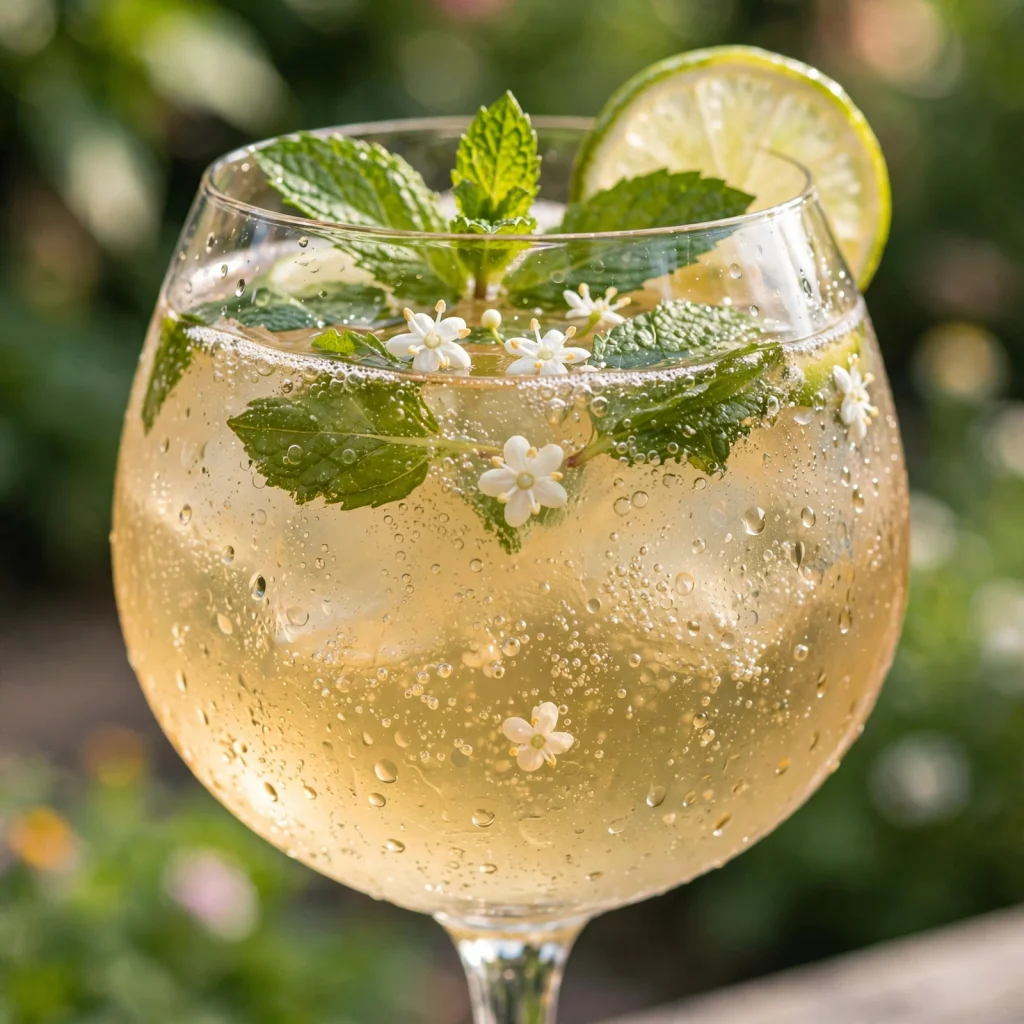
Table of Contents
- What Is a Hugo Spritz?
- Ingredients (makes 1 cocktail)
- How to Make a Hugo Spritz
- Tips for the Perfect Hugo Spritz
- Easy Variations
- Making Hugo Spritzes for a Crowd
- Frequently Asked Questions
What Is a Hugo Spritz?
The Hugo Spritz is a light Italian aperitivo cocktail born in the early 2000s in South Tyrol, the Alpine region of northern Italy that borders Austria. Bartender Roland Gruber created it in 2005 in the town of Naturns as a fresher, more floral alternative to the bitter Aperol Spritz — and he named it, simply, “Hugo.” From there it spread through Austria and Germany before conquering the rest of Europe and, eventually, the world.
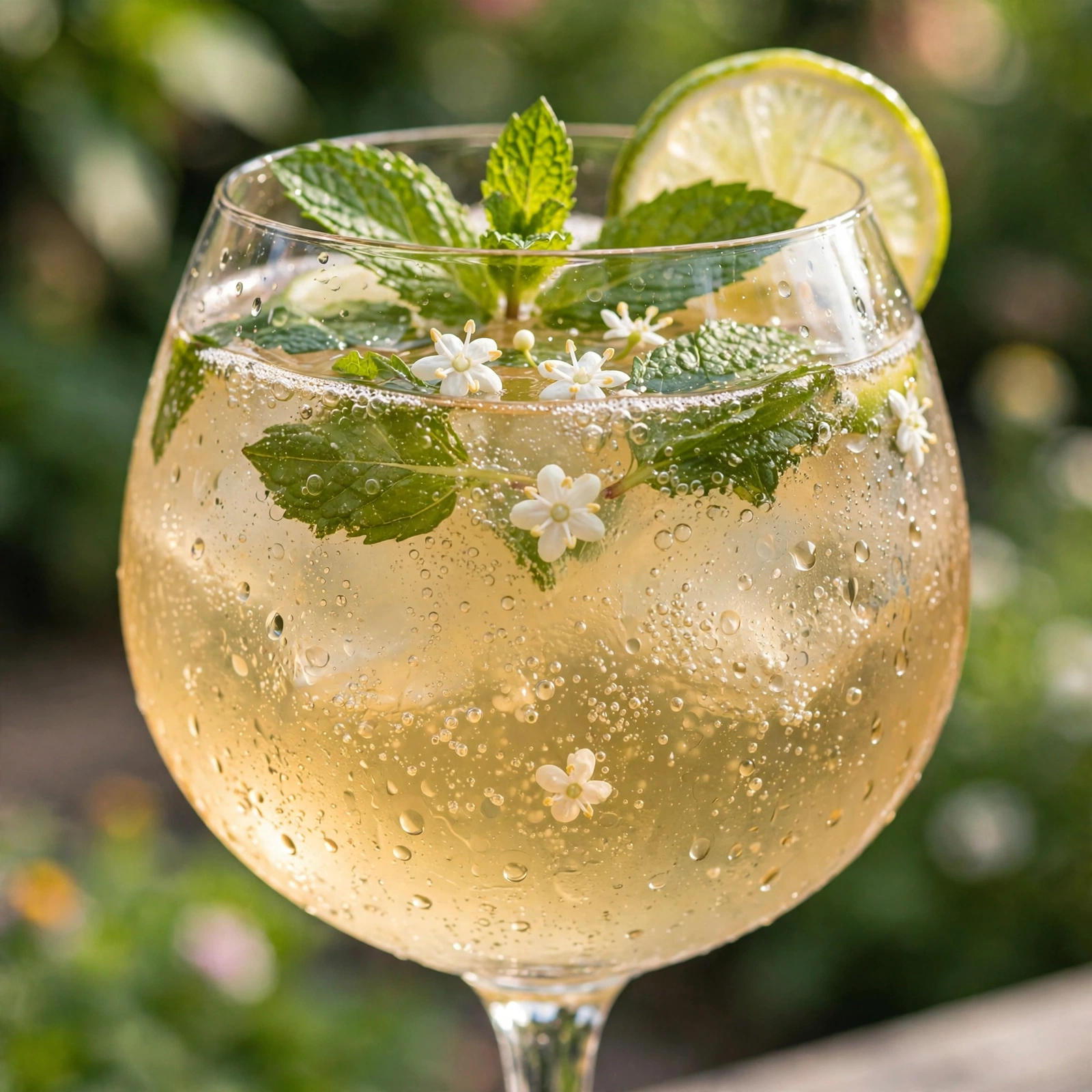
At its core, a Hugo Spritz is disarmingly simple: elderflower (as liqueur or syrup), Prosecco, soda water, fresh mint, and lime, served over ice in a large wine glass. The classic ratio is 3-2-1 — three parts Prosecco, two parts soda water, one part elderflower liqueur — which keeps it lighter and less boozy than most spritzes. The elderflower brings a delicate, honeyed floral sweetness; the mint and lime keep it bright and crisp; the bubbles do the rest. It’s lower in alcohol than a standard cocktail, endlessly sippable, and one of the few drinks that genuinely tastes like summer in a glass.
Ingredients (makes 1 cocktail)
- 6–8 fresh mint leaves — for muddling; plus one small sprig for garnish. Spearmint is ideal; avoid dried mint entirely.
- 2 thin lime slices (about 1/4 lime) — one goes in the glass, one for garnish. Lemon works in a pinch, but lime’s sharper tang balances the elderflower better.
- 1 oz (30 ml) elderflower liqueur — St-Germain is the gold standard, with a clean, concentrated floral flavor. Fiorente and Drillaud are excellent alternatives. See the FAQ below for the liqueur-vs-syrup debate.
- 3 oz (90 ml) dry Prosecco, well chilled — choose a brut or extra-dry Prosecco. Chill it thoroughly; a warm bottle means flat, diluted drinks.
- 2 oz (60 ml) chilled soda water — plain club soda or sparkling mineral water. This is more soda than a classic spritz uses, and it’s what keeps the Hugo so light.
- Plenty of ice — large cubes are best since they melt slowly and won’t water down the drink.
How to Make a Hugo Spritz
- Wake up the mint. Place 6–8 mint leaves in your palm, give them one firm slap with your other hand, and drop them into a large wine glass. Slapping releases the aromatic oils without shredding the leaves — which is exactly what causes bitter, murky drinks (more on this in the tips).
- Add the lime and ice. Drop in one thin lime slice and fill the glass generously with ice — all the way to the top. A full glass of ice keeps everything cold with minimal dilution.
- Pour the elderflower liqueur. Measure 1 oz (30 ml) of elderflower liqueur over the ice. Pouring it first lets it mingle with the mint as the other ingredients go in.
- Add the Prosecco. Pour in 3 oz (90 ml) of chilled Prosecco, tilting the glass slightly and pouring slowly down the side. This preserves the bubbles instead of foaming them away.
- Top with soda. Add 2 oz (60 ml) of chilled soda water.
- Stir once, gently. Give the drink one slow stir with a bar spoon or straw — just enough to combine, never vigorous. Over-stirring kills the fizz.
- Garnish and serve. Tuck a fresh mint sprig and the remaining lime slice into the glass. Serve immediately while it’s cold and bubbly.
Tips for the Perfect Hugo Spritz
The difference between a good Hugo Spritz and a great one comes down to a handful of small decisions. First, slap the mint, don’t shred it. Most recipes tell you to muddle the mint, and most people muddle too hard, tearing the leaves and releasing bitter chlorophyll. One firm slap between your palms releases all the aroma you need with zero bitterness. If you do prefer muddling, press gently two or three times with a spoon — never grind.
Second, temperature is everything. Chill your Prosecco and soda water before you start. A Hugo built with room-temperature ingredients will taste flat within minutes, while ice-cold components stay crisp and refreshing to the last sip. You can even chill your wine glasses in the freezer for ten minutes before serving.
Third, respect the ratio, but know how to bend it. The classic 3-2-1 ratio (Prosecco–soda–liqueur) is the sweet spot for most palates. If you like it sweeter and more floral, nudge the elderflower liqueur to 1.5 oz. If you prefer it drier and more sessionable, add an extra splash of soda. Taste and adjust — the recipe is forgiving.
Fourth, use large ice cubes. Small cubes and crushed ice melt fast and dilute the delicate elderflower flavor. Big, solid cubes keep the drink cold without watering it down.
Finally, pour the bubbly last and stir once. Prosecco and soda go in at the end, poured gently, with a single slow stir. Every extra stir knocks out carbonation, and a flat spritz is a sad spritz.
Easy Variations
Non-Alcoholic Hugo: Skip the liqueur and Prosecco entirely. Use 1 oz elderflower syrup (not liqueur — syrup is non-alcoholic), 4 oz chilled sparkling water, and 2 oz sparkling white grape juice for body. Build it exactly the same way with mint, lime, and ice. It tastes remarkably close to the original and is perfect for designated drivers and daytime gatherings.
Hugo Royale: Swap the Prosecco for Champagne or a dry Cava. The finer bubbles and toastier flavor make this the dinner-party upgrade — same floral lightness, noticeably more luxurious. Everything else stays identical.
Berry Hugo: Drop a small handful of fresh raspberries or sliced strawberries into the glass with the mint and give them the gentlest press. The berries tint the drink a gorgeous blush pink and add a jammy depth that pairs beautifully with elderflower. Blackberries work too.
Winter Spiced Hugo: For the colder months, add one star anise and a short cinnamon stick to the glass along with the mint, and garnish with a sprig of rosemary instead of mint. The warm spices turn the Hugo into a cozy holiday aperitivo without losing its signature lightness.
Cucumber Hugo: Add 3–4 thin ribbons of cucumber to the glass before the ice. Cucumber’s cool, green freshness is a natural partner for elderflower and makes the drink even more refreshing on scorching days.
Making Hugo Spritzes for a Crowd
The Hugo Spritz is a natural party drink, but there’s a right way and a wrong way to scale it. Never batch the Prosecco and soda — mixed hours ahead, they’ll go flat, and a flat spritz defeats the purpose. Instead, do the smart prep: for every 8 servings, combine 8 oz elderflower liqueur with a large handful of slapped mint leaves and 4 sliced limes in a pitcher. Cover and refrigerate for up to 4 hours — this infuses the base beautifully.
When guests arrive, set out the pitcher alongside a bucket of ice, chilled Prosecco, chilled soda water, and a stack of large wine glasses with extra mint and lime for garnish. Let everyone build their own (it takes 60 seconds and becomes part of the fun), or build them assembly-line style: ice, 1 oz of the infused base per glass, 3 oz Prosecco, 2 oz soda, one gentle stir, garnish. One standard 750 ml bottle of Prosecco makes about eight Hugo Spritzes, so plan one bottle per eight guests, plus a spare.
Frequently Asked Questions
Should I use elderflower liqueur or elderflower syrup?
Both work, but they make different drinks. Elderflower liqueur (like St-Germain, ~20% ABV) is the modern standard — it adds floral flavor plus a touch of alcohol and only mild sweetness. Elderflower syrup or cordial (like Belvoir or IKEA’s) is non-alcoholic and much sweeter; it’s arguably closer to the drink’s South Tyrolean roots, where elderflower syrup was the original ingredient. If you use syrup, cut back to 3/4 oz and taste before adding more, since it’s easy to oversweeten. For the classic cocktail-bar Hugo, use liqueur. For a lighter, lower-alcohol version or a mocktail base, use syrup.
What Prosecco is best for a Hugo Spritz?
A dry, inexpensive Prosecco — labeled brut or extra dry — is ideal. You don’t need an expensive bottle; the elderflower and mint are the stars, and a pricey Prosecco’s subtlety gets lost. Just make sure it’s well chilled. In a pinch, any dry sparkling white wine works: Spanish Cava is a great substitute, and even a dry Champagne (for a Hugo Royale) is delicious. Avoid sweet Proseccos labeled “dry” in the Italian sense — confusingly, Italian “extra dry” is actually sweeter than “brut,” so when in doubt, choose brut.
What’s the difference between a Hugo Spritz and an Aperol Spritz?
The base formula is similar — sparkling wine plus soda over ice — but the flavor couldn’t be more different. An Aperol Spritz is bitter, herbal, and vivid orange, made with Aperol and garnished with orange. A Hugo Spritz is floral, light, and pale gold, made with elderflower and garnished with mint and lime. The Hugo is also lower in alcohol and less bitter, which is why people who find Aperol too intense tend to love the Hugo.
Can I make a Hugo Spritz ahead of time?
Partially, yes. You can mix the elderflower liqueur with the mint and lime slices in a covered pitcher and refrigerate for up to 4 hours — the flavors actually improve with a short infusion. But always add the Prosecco, soda, and ice at serving time. A fully mixed Hugo left sitting will go flat and the mint will turn bitter.
How strong is a Hugo Spritz?
Lighter than most cocktails. With 1 oz of 20% ABV elderflower liqueur and 3 oz of ~11% ABV Prosecco diluted with 2 oz of soda over ice, a Hugo Spritz lands around 8–9% ABV — roughly the strength of a strong wine, and noticeably lighter than a Negroni or Martini. Using elderflower syrup instead of liqueur drops it to about 5–6% ABV.
What glass should I serve a Hugo Spritz in?
A large wine glass or balloon goblet is traditional. The wide bowl gives the bubbles room to rise, lets the mint and lime aromas gather under your nose, and holds plenty of ice — all of which make the drink taste better. A stemless wine glass works too. Avoid narrow flutes or small tumblers; they cramp the garnish and warm up too fast.
Related:
Classic Manhattan Recipe (The Perfect 2:1 Ratio)
Easy Mexican Street Corn Recipe (Elote, Ready in 25 Minutes)
Classic Aperol Spritz Recipe (The Perfect 3-2-1 Ratio)
Hugo Spritz
Ingredients
Method
- Slap 6-8 mint leaves once between your palms to release the oils, then drop them into a large wine glass.
- Add 1 thin lime slice and fill the glass to the top with ice.
- Pour 1 oz (30 ml) elderflower liqueur over the ice.
- Pour in 3 oz (90 ml) chilled Prosecco, tilting the glass and pouring slowly to preserve the bubbles.
- Top with 2 oz (60 ml) chilled soda water.
- Stir once, gently, with a bar spoon — just enough to combine.
- Garnish with a fresh mint sprig and the remaining lime slice. Serve immediately.