
Lemon Pound Cake Recipe – Moist, Buttery & Easy
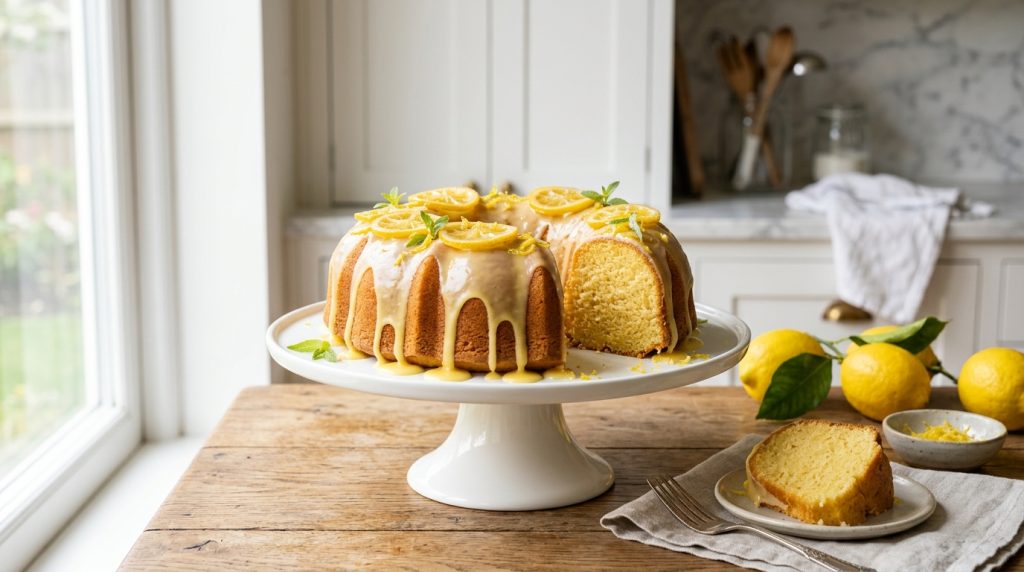
A successful lemon pound cake recipe balances the richness of high-fat dairy with the sharp acidity of fresh citrus. This dessert relies on a dense, tight crumb that feels substantial yet melts away as you eat it. Unlike a standard sponge, which is airy and light, this version uses the weight of creamed butter and sugar to create a velvety texture that holds its moisture for several days.
The character of the cake comes from using both the juice and the zest of the lemon. Zest provides the essential oils that carry the most potent aroma, while the juice adds a necessary tang to cut through the sugar. It is a reliable choice for gatherings because it travels well and doesn’t require refrigeration to stay fresh.
- Prep time: 20 minutes
- Cook time: 65 minutes
- Total time: 85 minutes
- Servings: 10
- Calories: 450 per serving
Ingredients
- 1 1/2 cups (340g) unsalted butter, softened to room temperature
- 3 cups (600g) granulated sugar
- 5 large eggs, room temperature
- 3 cups (375g) all-purpose flour, sifted
- 1/2 tsp baking soda
- 1/2 tsp kosher salt
- 1 cup (240g) full-fat sour cream
- 2 tbsp fresh lemon zest (approximately 3 large lemons)
- 3 tbsp fresh lemon juice
- 1 tsp pure vanilla extract
Instructions
- Preheat your oven to 325°F (165°C). Generously grease a 10-inch Bundt pan with butter and dust it with flour, tapping out any excess.
- Place the softened butter and granulated sugar in a large bowl. Using a stand mixer fitted with the paddle attachment, cream them on medium-high speed for 5 minutes until the mixture looks pale and fluffy.
- Add the eggs one at a time. Beat for about 30 seconds after each addition to ensure the fats and proteins emulsify properly.
- In a medium bowl, whisk together the sifted flour, baking soda, and salt.
- Adjust the mixer to its lowest speed. Add one-third of the flour mixture, followed by half of the sour cream. Repeat the process, ending with the final third of the flour.
- Stop the mixer as soon as the last streaks of flour disappear. Overmixing at this stage will make the cake tough.
- Gently fold in the lemon zest, lemon juice, and vanilla extract using a wide silicone spatula.
- Transfer the batter into the prepared pan. Smooth the surface with the back of a spoon to ensure an even rise.
- Bake for 60 to 75 minutes. The cake is finished when a long wooden skewer inserted into the thickest part comes out clean or with a few dry crumbs.
- Let the cake rest in the pan for exactly 15 minutes. Invert it onto a wire cooling rack and allow it to cool completely before slicing.
Tips
- Always use room temperature eggs and butter. Cold ingredients won’t bond correctly, which often results in a heavy, oily layer at the bottom of the cake.
- Sift the flour before measuring or use a kitchen scale. Packing flour into a measuring cup can lead to using up to 25% more than intended, drying out the crumb.
- Avoid bottled lemon juice. The flavor is often bitter or metallic compared to the bright, clean taste of fruit squeezed just before use.
- If the top of the cake is browning too quickly, place a piece of aluminum foil loosely over the top during the last 20 minutes of baking.
FAQ
What is the secret to a moist pound cake?
The addition of sour cream is the most effective way to ensure moisture. The high fat content and acidity tenderize the gluten in the flour, resulting in a soft, velvety texture that doesn’t dry out as quickly as cakes made with milk or water.
Why did my pound cake sink in the middle?
This usually happens if the eggs were beaten too vigorously or if the oven door was opened too early in the baking process. Excessive air trapped in the batter expands and then collapses, while a sudden drop in temperature prevents the structure from setting.
Can I use a loaf pan instead of a Bundt pan?
Yes, this batter will fit into two standard 9×5-inch loaf pans. You will need to reduce the baking time to approximately 45 to 55 minutes. Check for doneness early, as the smaller volume of batter cooks faster than a single large Bundt.
How do I stop the cake from sticking to the pan?
Use a combination of butter and flour, or a specialized baking spray that contains flour. For intricate Bundt designs, use a pastry brush to ensure every crevice is coated. Never leave the cake in the pan for more than 20 minutes, or the cooling sugars will act like glue.
Conclusion
Mastering a dense, buttery crumb is a rewarding milestone for any home baker. While the process is straightforward, the quality of your butter and the freshness of your citrus determine the final outcome. Once you have mastered this lemon pound cake recipe, the variations are nearly endless. You might choose to add a simple powdered sugar glaze or serve slices alongside macerated strawberries and a dollop of whipped cream.
Baking is as much about patience as it is about precision. Letting the cake cool fully before slicing ensures the structure sets properly, giving you those clean, beautiful slices every time. Share your results with friends or keep a loaf in the freezer for unexpected guests. If you have questions about specific substitutions or pan sizes, leave a comment below to join the conversation.
Lemon pound cake recipe

A successful lemon pound cake recipe balances the richness of high-fat dairy with the sharp acidity of fresh citrus. This dessert relies on a dense, tight crumb that feels substantial yet melts away as you eat it. Unlike a standard sponge, which is airy and light, this version uses the weight of cre
Ingredients
- 1 1/2 cups (340g) unsalted butter, softened to room temperature
- 3 cups (600g) granulated sugar
- 5 large eggs, room temperature
- 3 cups (375g) all-purpose flour, sifted
- 1/2 tsp baking soda
- 1/2 tsp kosher salt
- 1 cup (240g) full-fat sour cream
- 2 tbsp fresh lemon zest (approximately 3 large lemons)
- 3 tbsp fresh lemon juice
- 1 tsp pure vanilla extract
Instructions
- Preheat your oven to 325°F (165°C). Generously grease a 10-inch Bundt pan with butter and dust it with flour, tapping out any excess.
- Place the softened butter and granulated sugar in a large bowl. Using a stand mixer fitted with the paddle attachment, cream them on medium-high speed for 5 minutes until the mixture looks pale and fluffy.
- Add the eggs one at a time. Beat for about 30 seconds after each addition to ensure the fats and proteins emulsify properly.
- In a medium bowl, whisk together the sifted flour, baking soda, and salt.
- Adjust the mixer to its lowest speed. Add one-third of the flour mixture, followed by half of the sour cream. Repeat the process, ending with the final third of the flour.
- Stop the mixer as soon as the last streaks of flour disappear. Overmixing at this stage will make the cake tough.
- Gently fold in the lemon zest, lemon juice, and vanilla extract using a wide silicone spatula.
- Transfer the batter into the prepared pan. Smooth the surface with the back of a spoon to ensure an even rise.
- Bake for 60 to 75 minutes. The cake is finished when a long wooden skewer inserted into the thickest part comes out clean or with a few dry crumbs.
- Let the cake rest in the pan for exactly 15 minutes. Invert it onto a wire cooling rack and allow it to cool completely before slicing.
Similar Posts
Cranberry Orange Dump Cake Recipe | Easy & Delicious
The balance of tart, ruby-red berries and bright, aromatic citrus creates a dessert that feels sophisticated despite its effortless preparation. This dish relies on the contrast between a syrupy fruit base and a buttery, golden-brown topping that forms naturally as it bakes. Because it requires minimal measuring and no complex mixing, a cranberry orange dump…
Fruity Pebbles Frosting Recipe – Sweet & Creamy Fun
If you’ve ever wished your desserts could taste like a bowl of your favorite childhood cereal, this Fruity Pebbles frosting is about to make your day. It’s bright, buttery, sweet, and packed with that nostalgic fruity crunch that instantly transforms any cake or cupcake into something fun and unforgettable. This frosting isn’t just about looks…
Red Velvet Cake Recipe – Moist Cake With Cream Cheese Frosting
The allure of a perfect red velvet cake lies in its contradictions. It is not quite a chocolate cake, yet it carries a whisper of cocoa. It is strikingly bold in color, yet its flavor profile is sophisticated, leaning on the subtle tang of buttermilk and the sharp brightness of vinegar. Finding that elusive balance—a…
Mint Chocolate Balls – Rich, Creamy & Refreshing Treats
Creating bite-sized confections that balance the cool, sharp bite of peppermint with the richness of dark cocoa is a rewarding kitchen project. These treats offer a sophisticated flavor profile that appeals to both casual snackers and those looking for an elegant post-dinner indulgence. By combining high-quality chocolate with a refreshing mint infusion, you can produce…
No-Bake Strawberry Shortcake Balls – Easy Dessert Recipe
Strawberry shortcake is a timeless dessert, but the effort required to bake sponges and whip fresh cream can often deter home cooks. These bite-sized treats capture the essence of the classic summer staple without ever turning on the oven. By combining crushed shortbread cookies, cream cheese, and freeze-dried strawberries, you create a dense, flavorful truffle…
No Bake Easter Egg Cheesecake – Easy Recipe
Creating a festive dessert doesn’t have to involve complicated pastry work or heating up the oven. A decadent no bake easter egg cheesecake provides a smooth, velvety texture that contrasts beautifully with the crunch of chocolate candy shells. Because it relies on refrigeration to set rather than baking, you avoid the risk of cracks or…


