
Whole Wheat Bread Recipe – Soft, Healthy & Easy
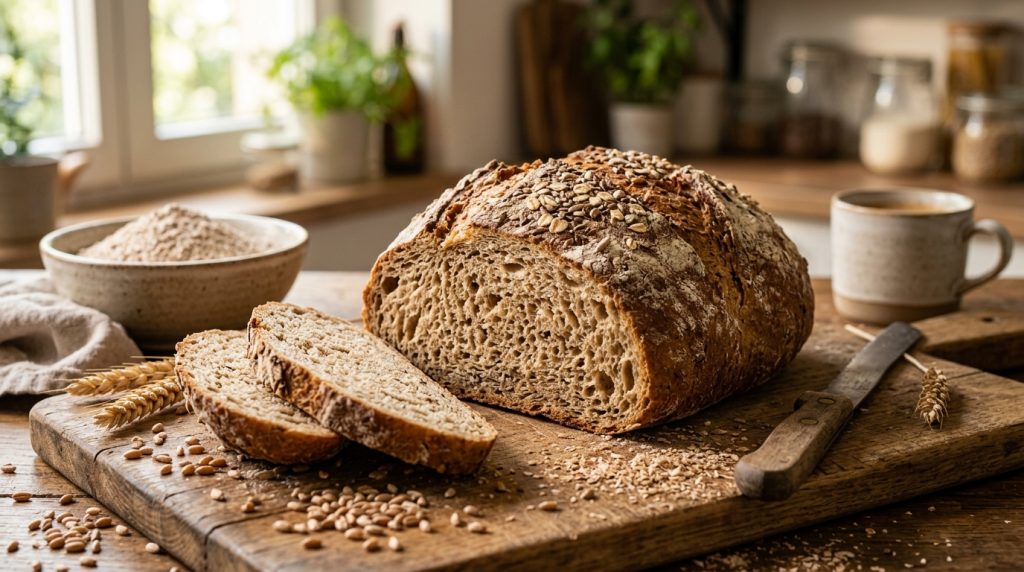
Making bread at home offers a level of control over nutrition that store-bought loaves simply cannot match. While many find working with heavier grains intimidating, mastering a reliable whole wheat bread recipe allows you to produce a nutty, fiber-rich staple that pairs perfectly with any topping.
Success depends on understanding how whole grain flour behaves. The bran in the wheat can sometimes cut through gluten strands, leading to a dense texture if not handled correctly. By focusing on hydration and proper kneading, you can achieve a soft crumb and a sturdy crust.
- Prep time: 20 minutes
- Cook time: 35 minutes
- Total time: 160 minutes
- Servings: 12
- Calories: 140 per serving
Ingredients
- 3 cups whole wheat flour, spooned and leveled
- 1 1/4 cups warm water, 105-115°F
- 2 1/4 tsp active dry yeast, 1 standard packet
- 2 tbsp honey
- 1 tsp fine sea salt
- 2 tbsp unsalted butter, melted and cooled slightly
- 1 tbsp olive oil, for greasing the bowl
Instructions
- Combine the warm water, honey, and active dry yeast in a large mixing bowl and whisk gently. Let the mixture sit for 10 minutes until a thick layer of foam develops on the surface.
- Stir the melted butter and sea salt into the yeast mixture. Add the whole wheat flour one cup at a time, stirring with a sturdy wooden spoon until the dough pulls away from the sides of the bowl.
- Turn the dough onto a clean, lightly floured surface. Knead the dough by hand for 8 to 10 minutes, stretching and folding it until it becomes smooth, elastic, and no longer sticks to your hands.
- Coat a large glass bowl with the olive oil. Place the dough inside, turning it once to coat the surface, then cover with a damp kitchen towel and let it rise in a warm spot for 60 minutes or until it has doubled in size.
- Press your fist into the center of the dough to deflate it. Transfer the dough to a greased 9×5-inch loaf pan, pressing it firmly into the corners and smoothing the top.
- Cover the loaf pan and allow the dough to rise a second time for 45 minutes. The center of the dough should rise about one inch above the rim of the pan.
- Preheat your oven to 350°F (175°C) while the bread finishes its second rise.
- Bake the loaf on the center rack for 30 to 35 minutes. The crust should be deep golden brown, and the loaf should sound hollow when tapped on the bottom.
- Remove the bread from the pan immediately to prevent a soggy crust. Place it on a wire cooling rack and wait at least 30 minutes before slicing.
Tips
- Test the temperature of your water with a thermometer. Water above 120°F will kill the yeast, while water below 100°F will not activate it properly.
- Use the windowpane test to check your kneading. Stretch a small piece of dough; if it becomes thin enough to see light through without tearing, the gluten is sufficiently developed.
- Replace the honey with maple syrup or agave nectar for a vegan-friendly version.
- Store leftovers in an airtight bag at room temperature for up to three days. For longer storage, slice the loaf and freeze it for up to three months.
FAQ
Why is my whole wheat bread so heavy and dense?
Whole wheat flour contains the entire grain, including the sharp-edged bran. This bran can physically cut the gluten strands that trap air bubbles. To fix this, ensure you knead the dough long enough to develop strength and avoid adding too much extra flour during the process.
Can I use instant yeast instead of active dry yeast?
Yes, you can substitute instant yeast in equal measurements. If using instant yeast, you do not need to proof it in water first; simply mix it directly into the flour and add the liquid ingredients together.
How do I get a softer crust on my homemade bread?
For a softer, more sandwich-style crust, brush the top of the loaf with a tablespoon of melted butter or a light coating of olive oil immediately after you remove it from the oven. Covering the cooling loaf with a clean towel also traps a bit of steam to soften the exterior.
Do I need to use a bread machine for this recipe?
This recipe is designed for hand-kneading and oven-baking, which provides a better texture and more traditional shape. While you can use a machine on the dough setting, finishing the rise and bake in a standard loaf pan usually yields more consistent results.
Conclusion
Baking a fresh loaf provides a sense of accomplishment that few other kitchen tasks can replicate. Once you feel comfortable with this whole wheat bread recipe, you can experiment with additions like sunflower seeds, oats, or cracked pepper to customize the flavor profile. The key is patience during the rising stages, as rushing the fermentation will result in a heavy, unappealing texture.
Transitioning away from processed breads improves the nutritional quality of your meals significantly. Keep your flour stored in a cool, dark place to prevent the natural oils from going rancid. If you find your first few attempts are thicker than expected, don’t be discouraged; humidity and altitude play huge roles in baking. Share your results with friends or family, and let the process of hand-kneading become a relaxing part of your weekly routine.
Whole wheat bread recipe

Making bread at home offers a level of control over nutrition that store-bought loaves simply cannot match. While many find working with heavier grains intimidating, mastering a reliable whole wheat bread recipe allows you to produce a nutty, fiber-rich staple that pairs perfectly with any topping.
Ingredients
- 3 cups whole wheat flour, spooned and leveled
- 1 1/4 cups warm water, 105-115°F
- 2 1/4 tsp active dry yeast, 1 standard packet
- 2 tbsp honey
- 1 tsp fine sea salt
- 2 tbsp unsalted butter, melted and cooled slightly
- 1 tbsp olive oil, for greasing the bowl
Instructions
- Combine the warm water, honey, and active dry yeast in a large mixing bowl and whisk gently. Let the mixture sit for 10 minutes until a thick layer of foam develops on the surface.
- Stir the melted butter and sea salt into the yeast mixture. Add the whole wheat flour one cup at a time, stirring with a sturdy wooden spoon until the dough pulls away from the sides of the bowl.
- Turn the dough onto a clean, lightly floured surface. Knead the dough by hand for 8 to 10 minutes, stretching and folding it until it becomes smooth, elastic, and no longer sticks to your hands.
- Coat a large glass bowl with the olive oil. Place the dough inside, turning it once to coat the surface, then cover with a damp kitchen towel and let it rise in a warm spot for 60 minutes or until it has doubled in size.
- Press your fist into the center of the dough to deflate it. Transfer the dough to a greased 9×5-inch loaf pan, pressing it firmly into the corners and smoothing the top.
- Cover the loaf pan and allow the dough to rise a second time for 45 minutes. The center of the dough should rise about one inch above the rim of the pan.
- Preheat your oven to 350°F (175°C) while the bread finishes its second rise.
- Bake the loaf on the center rack for 30 to 35 minutes. The crust should be deep golden brown, and the loaf should sound hollow when tapped on the bottom.
- Remove the bread from the pan immediately to prevent a soggy crust. Place it on a wire cooling rack and wait at least 30 minutes before slicing.
Related:
Easy Sourdough Bread Recipe (Crusty Outside, Chewy Inside)
Yeast Bread Recipe – Soft, Fluffy Homemade Bread
Easy Einkorn Bread Recipe for Soft Homemade Loaf
Similar Posts
Gooey Turtle Brownies with Walnuts and Pecans
The combination of rich dark chocolate, buttery caramel, and toasted nuts creates a dessert experience that is difficult to surpass. These brownies feature a dense, fudgy base that contrasts perfectly with the chewy, salted caramel sauce swirled throughout the batter. By adding toasted walnuts and pecans, you introduce a necessary crunch that balances the intense…
Easter Brownies with Bunny Pawprints – Easy & Cute Recipe
Creating festive holiday treats is a wonderful way to bring family together in the kitchen, especially during the spring season. These decadent, fudgy squares provide the perfect canvas for creative decorating, transforming a standard dessert into a whimsical centerpiece. By adding simple, hand-crafted details using melted chocolate and candies, you can easily create easter brownies…
Lemon Dump Cake With Creamy Layers – Easy Recipe
Combining the bright, zesty profile of citrus with a rich, velvety texture, this dessert offers a refreshing alternative to heavy chocolate bakes. The preparation relies on the effortless layering of pantry staples, resulting in a golden, buttery crust that conceals a luscious, pudding-like center. Preparing a lemon dump cake with creamy layers provides a sophisticated…
Chocolate Chipotle Ice Cream Recipe | Sweet & Spicy
The combination of deep, bittersweet cocoa and the smoky heat of dried jalapeños creates a sophisticated profile that balances indulgence with a surprising kick. Making chocolate chipotle ice cream at home allows you to control the intensity of the spice, ensuring the warmth lingers gently on the palate without overwhelming the richness of the dairy….
Easy Dubai Chocolate Bar Recipe With Pistachio Filling
There is something undeniably magnetic about the viral Dubai chocolate bar that has taken social media by storm. If you have been scrolling through TikTok or Instagram lately, you have likely seen the cross-section of a thick, glossy chocolate shell revealing a vibrant, emerald-green center. This isn’t just any candy bar; it is an explosion…
Timeless Dessert Recipes: Classic Sweet Creations That Never Go Out of Style
Desserts evolve with trends, but some recipes remain forever loved. Timeless dessert recipes are those classic sweets that have been passed down through generations, celebrated for their comforting flavors, simple ingredients, and reliable results. These desserts never lose their appeal because they balance tradition, taste, and emotional connection. This comprehensive guide explores classic dessert recipes…


